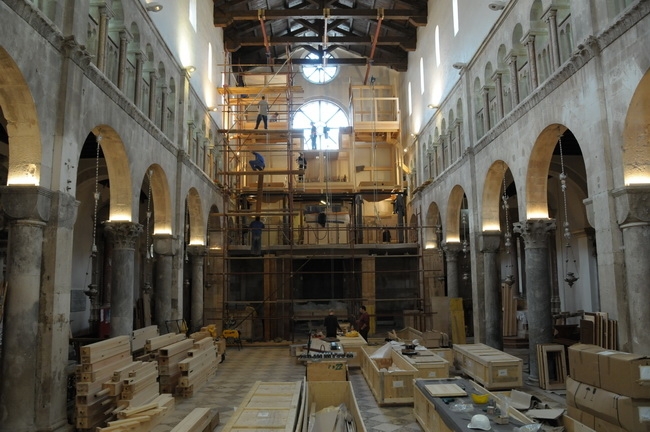
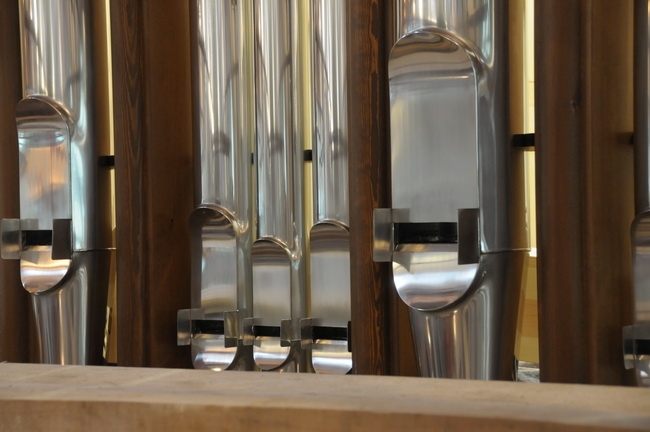
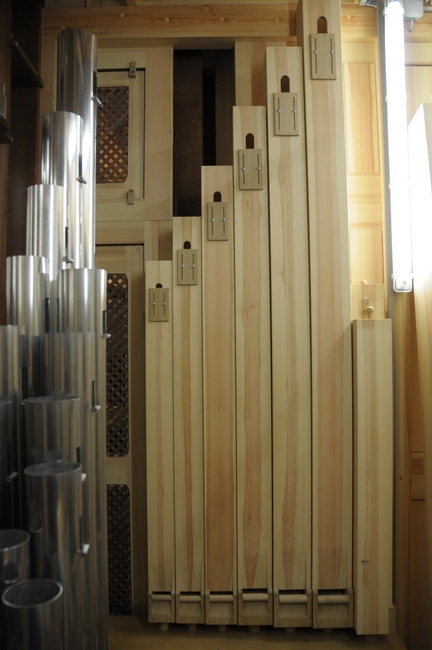
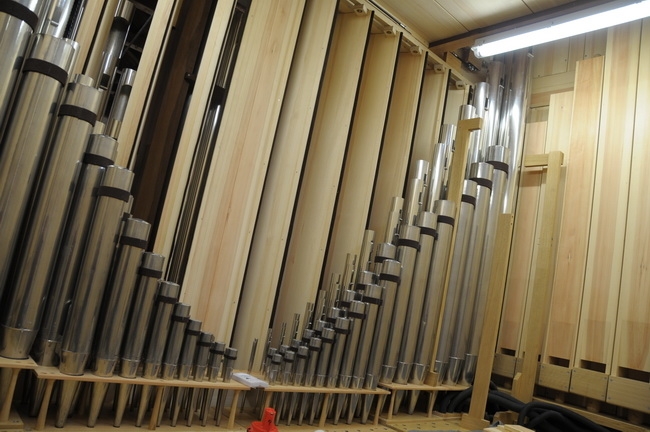
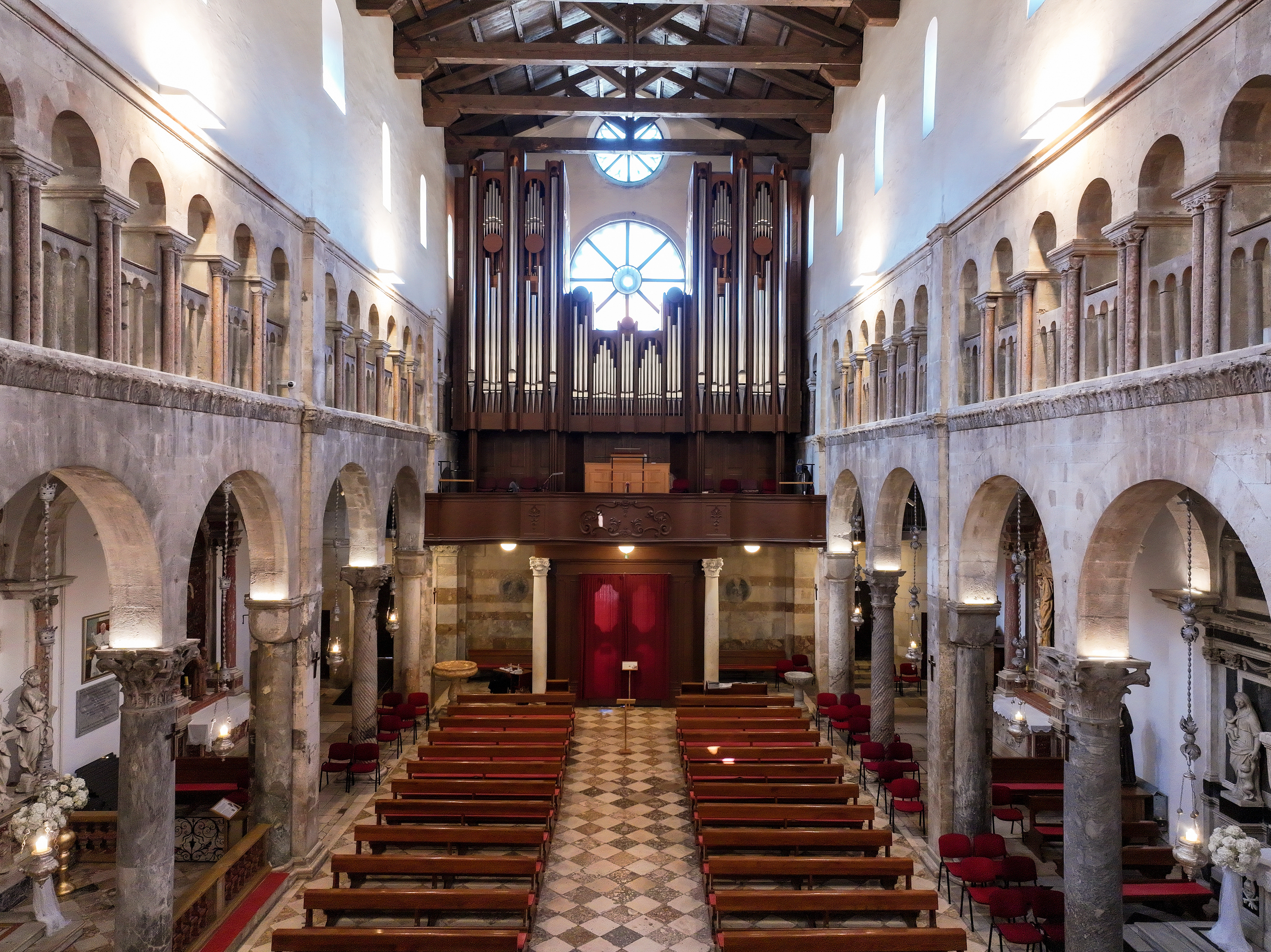
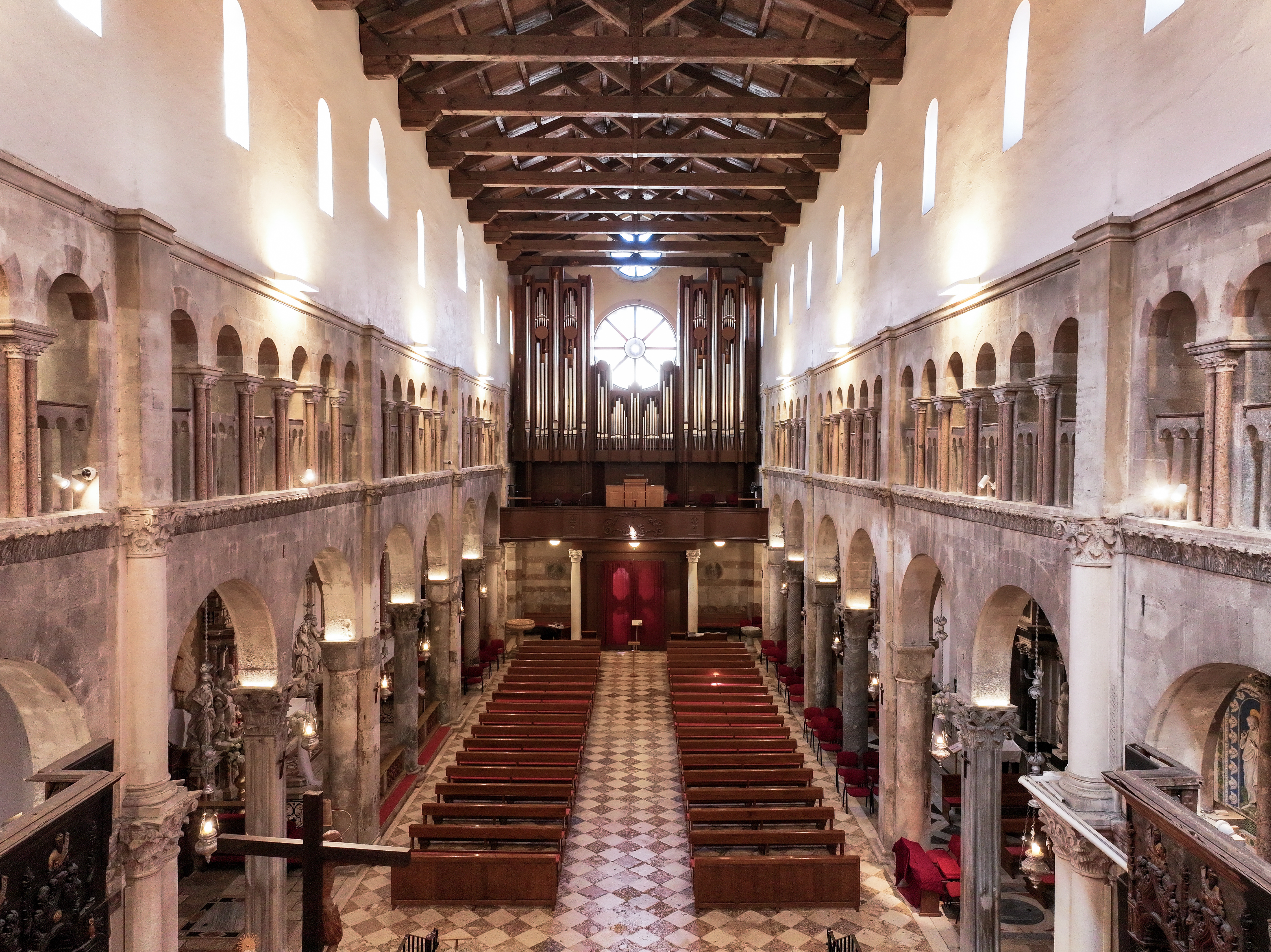
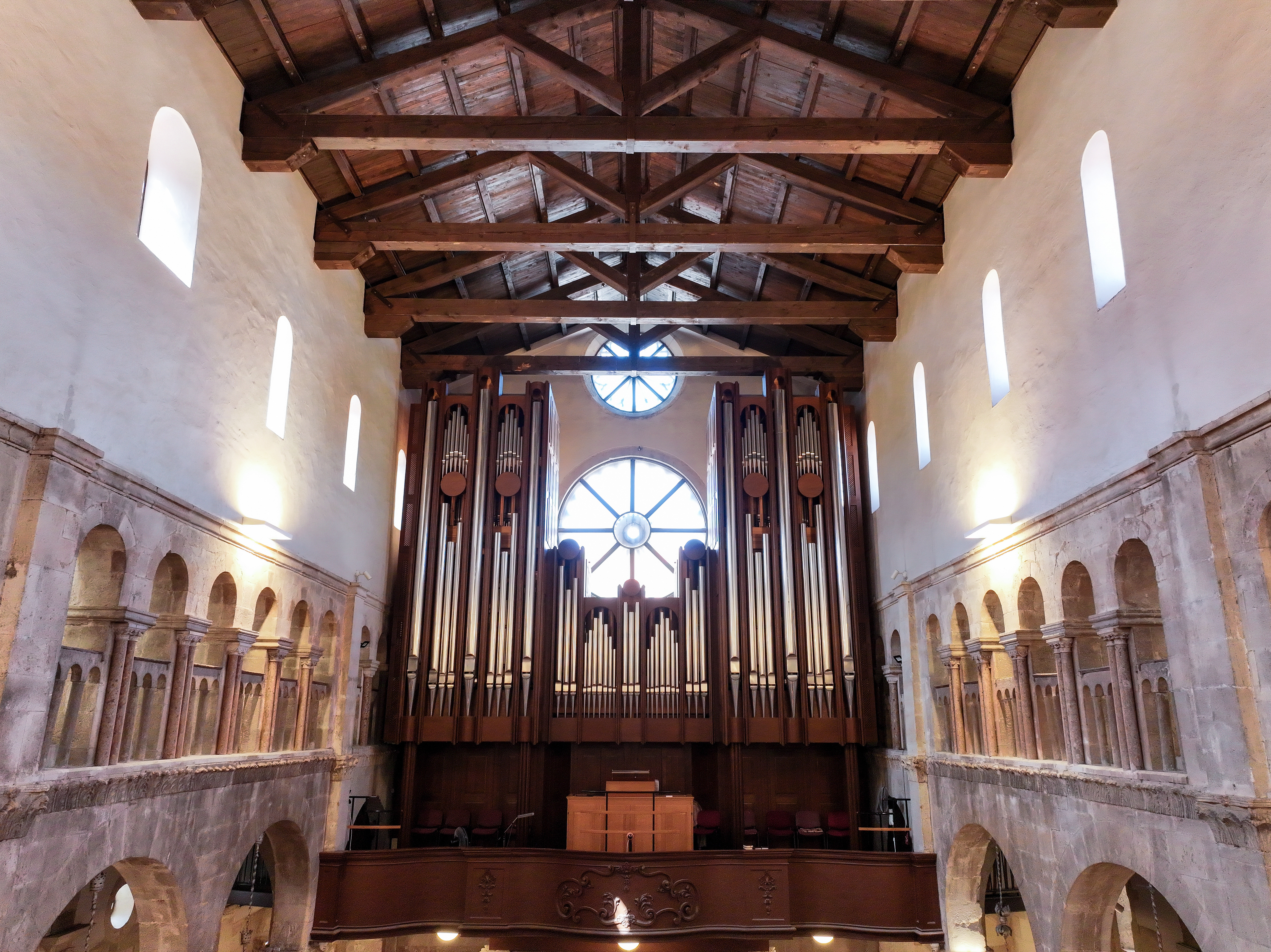
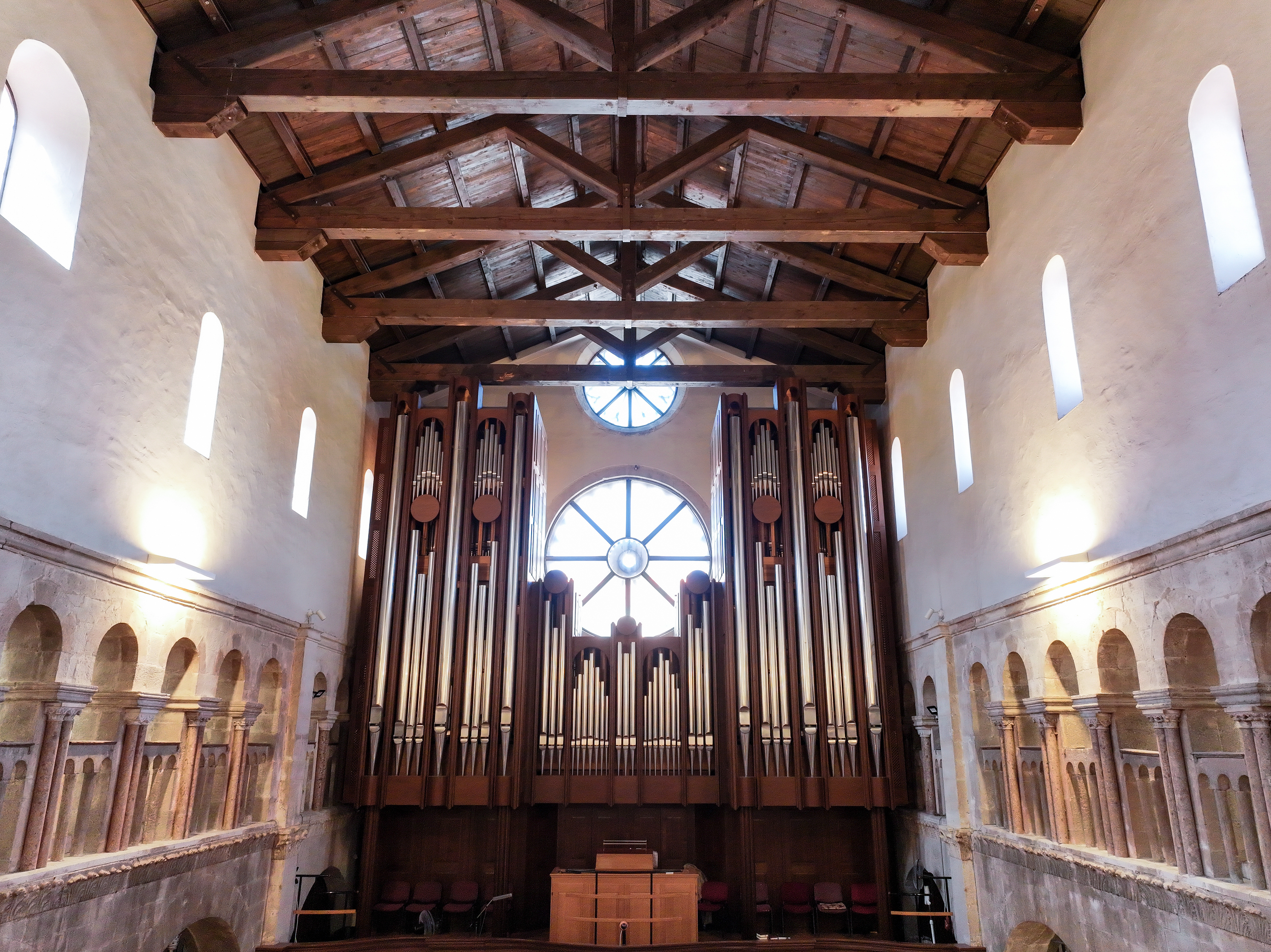
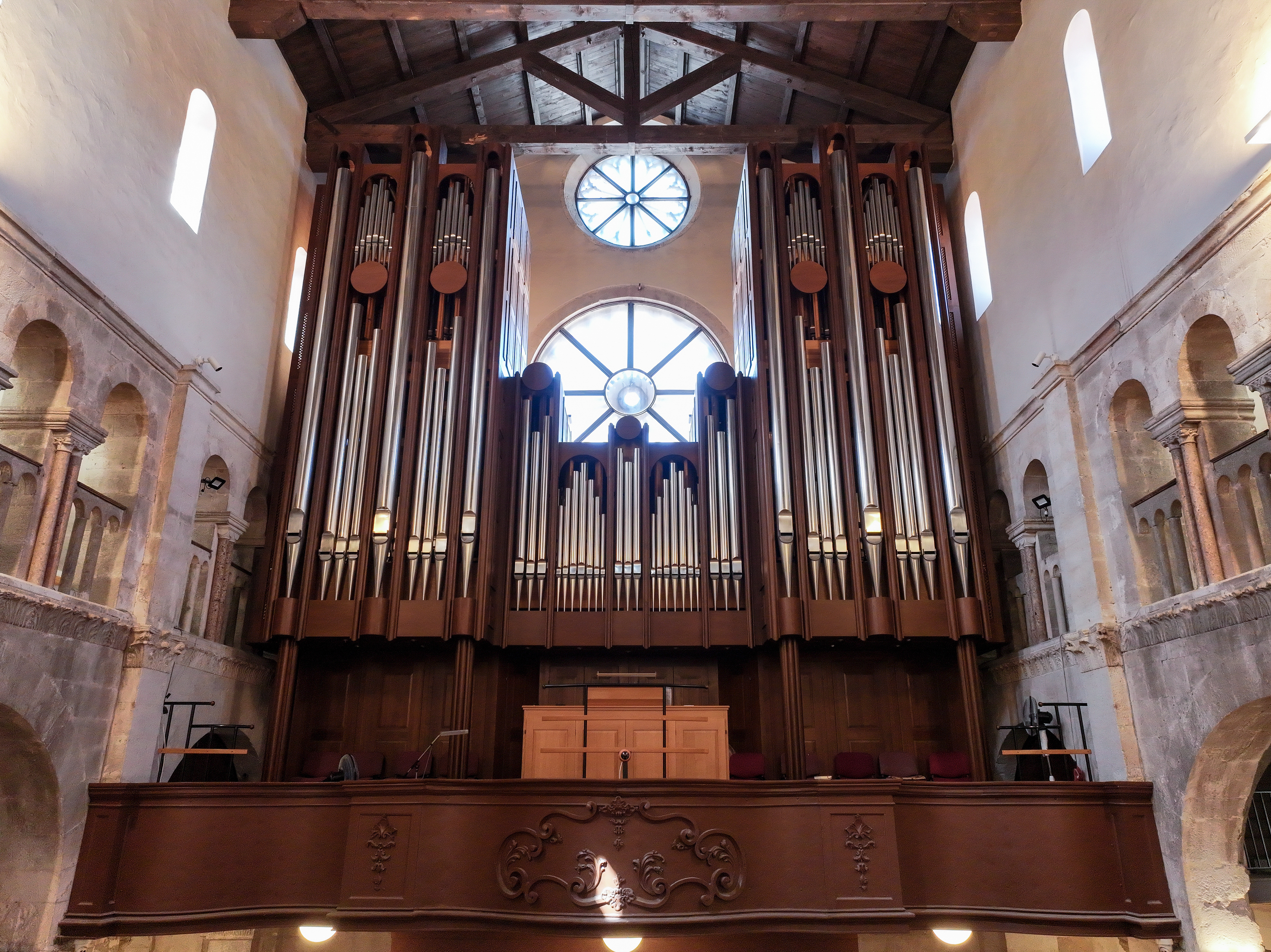
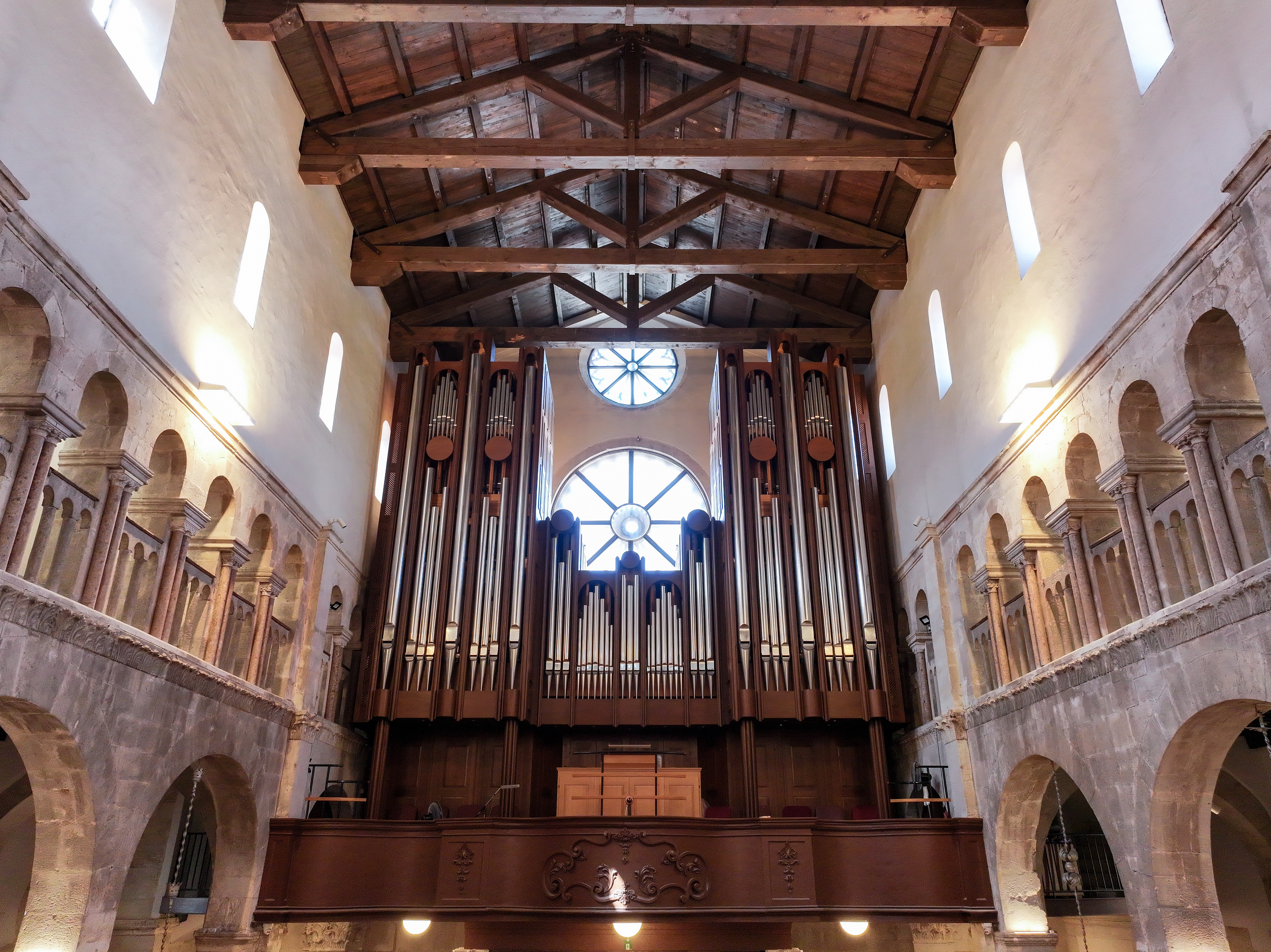
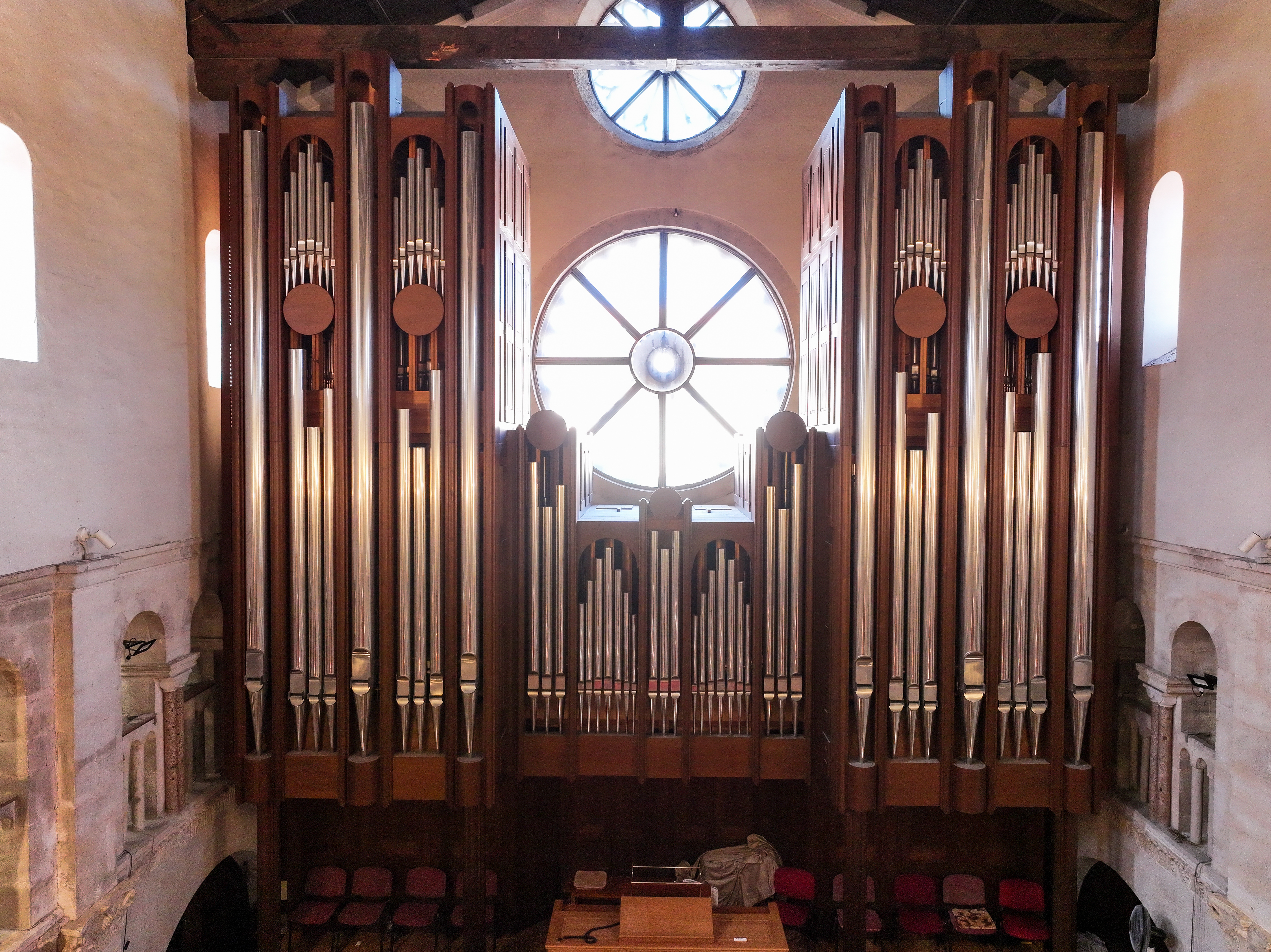
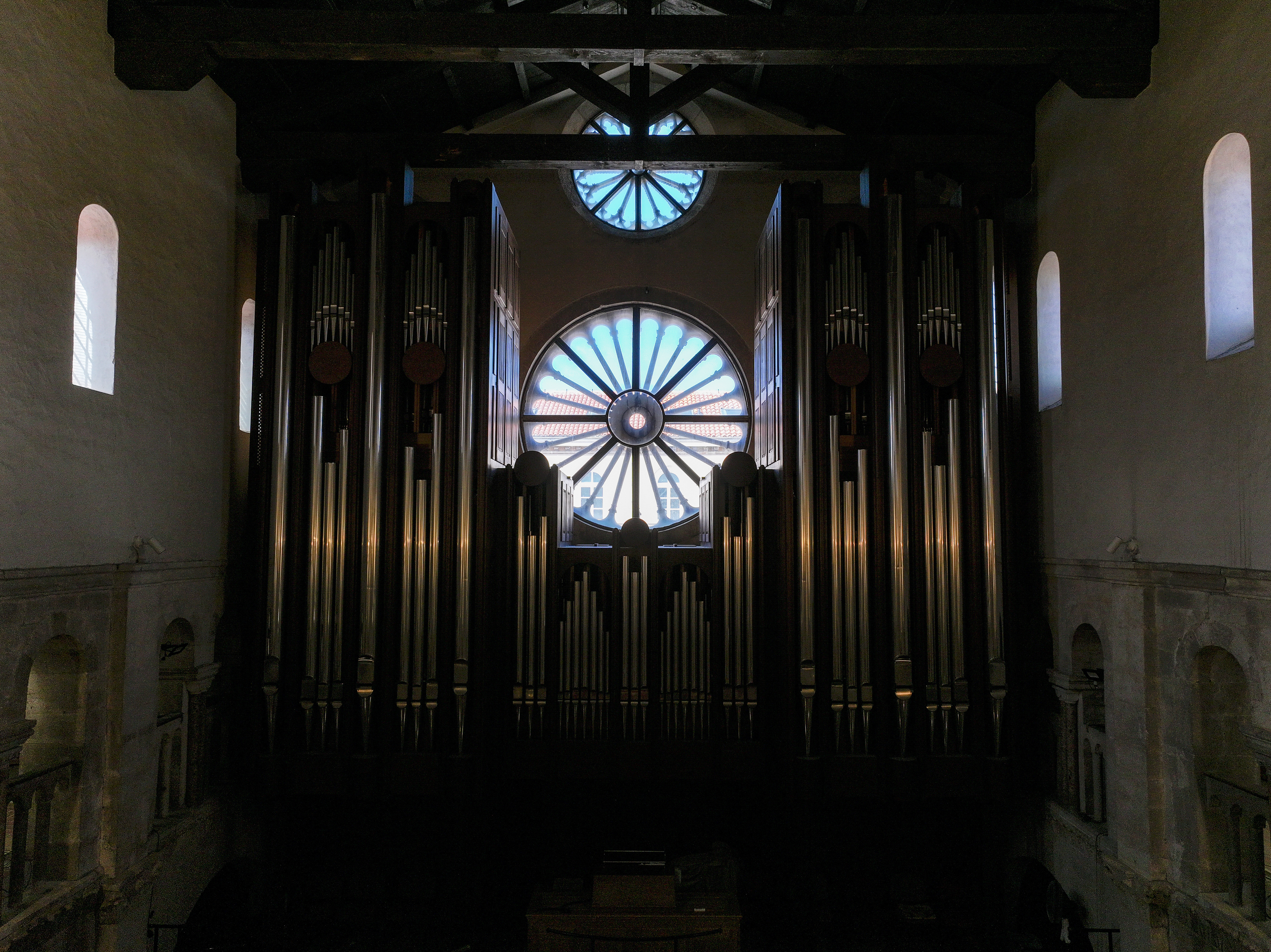
Eisenbarth Organ in the Cathedral of St. Stošija
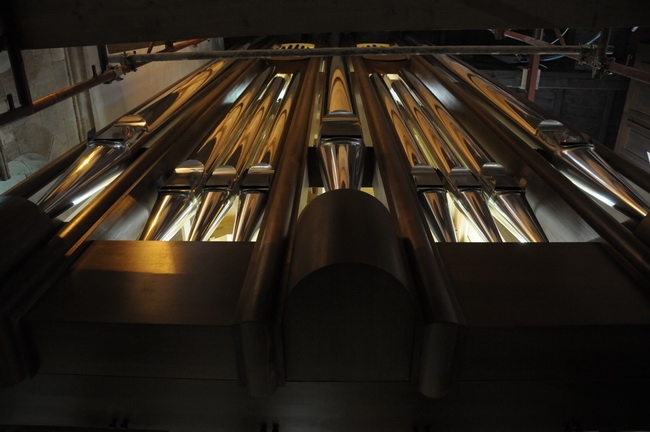
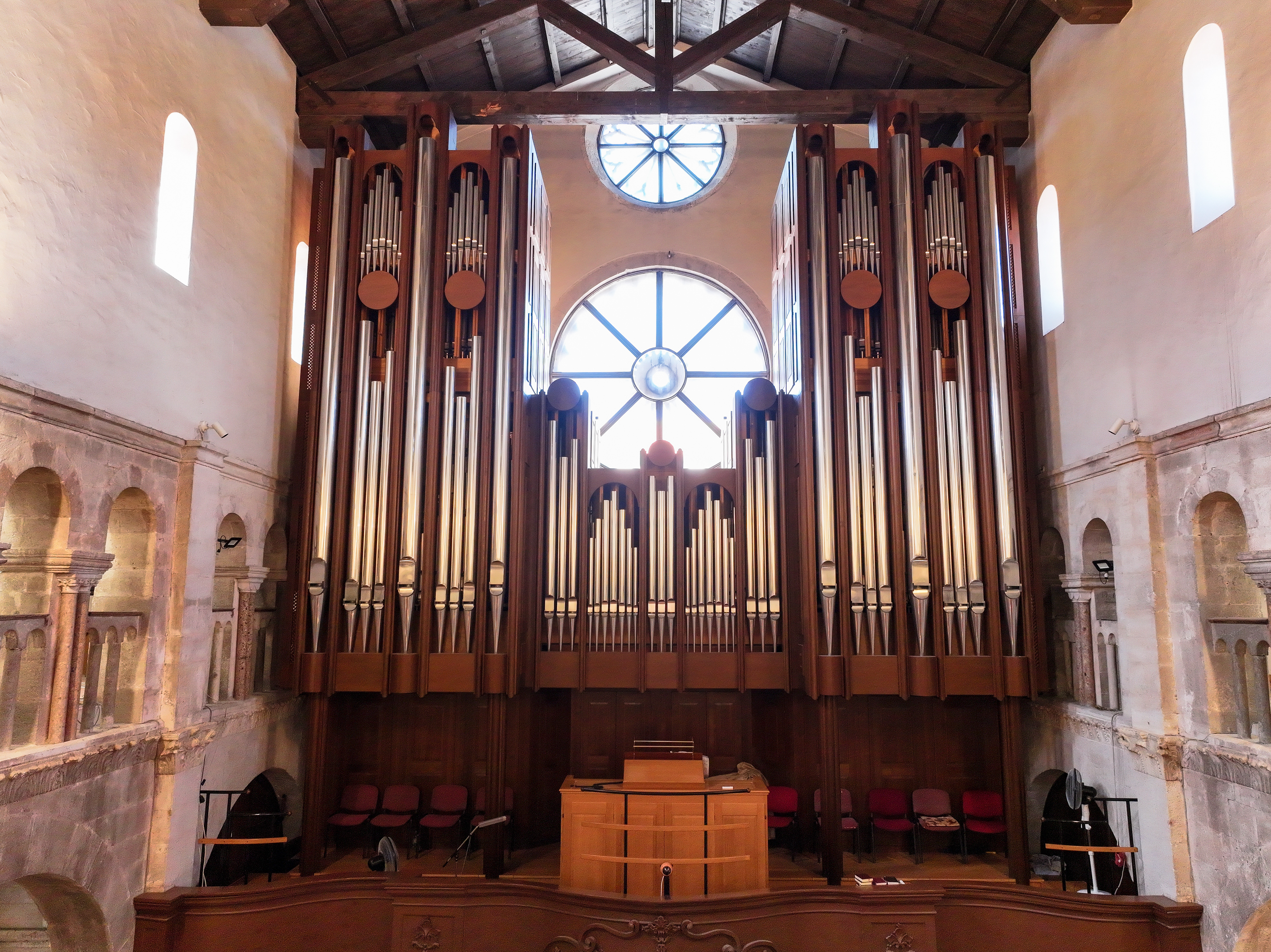
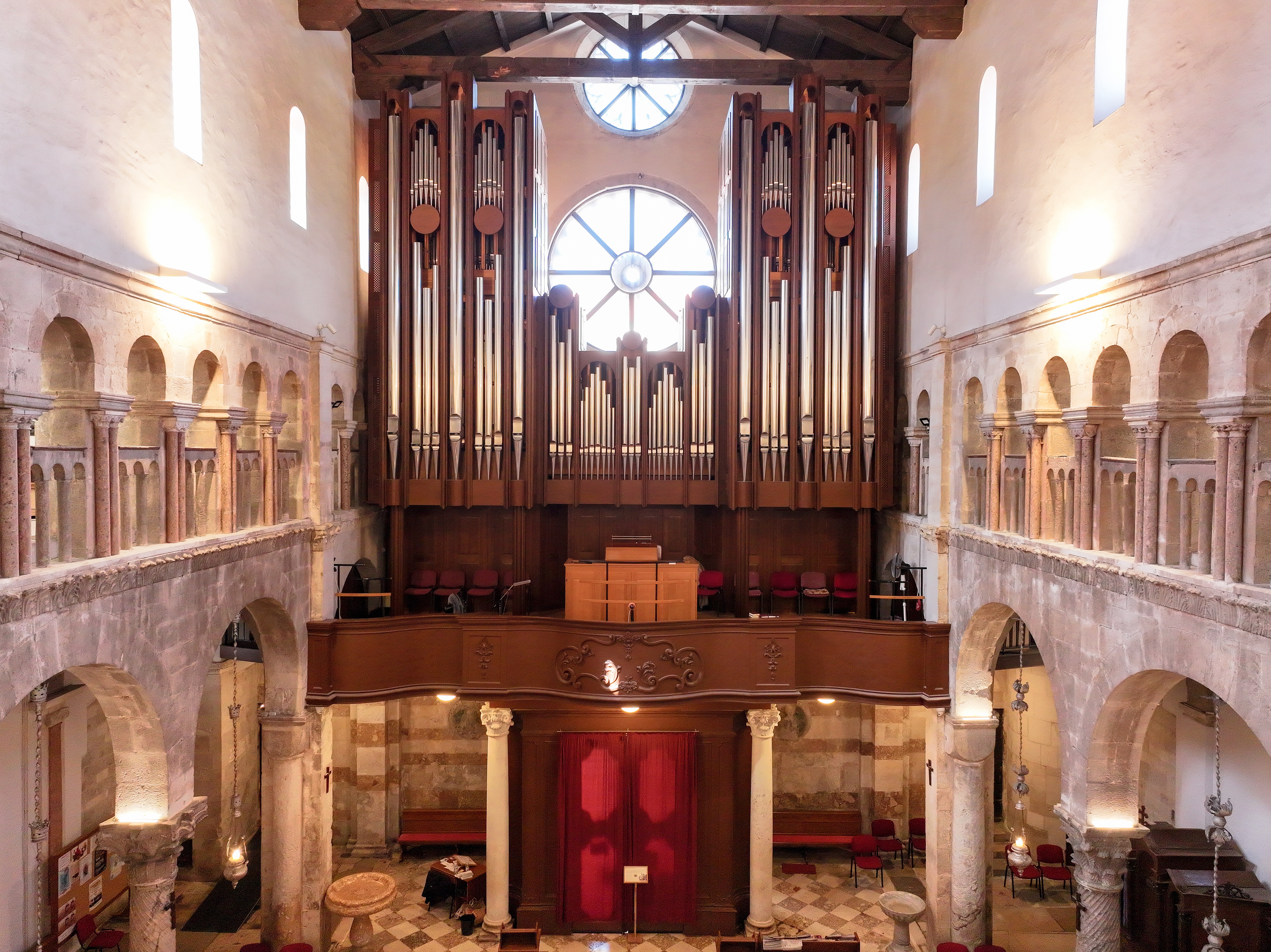
The organ was handcrafted in one of the world’s finest traditional workshops – Eisenbarth, located in the German diocesan city of Passau.
The cathedral’s previous organ, in use since 1977, was destroyed during the Croatian War of Independence. On the same day that Škabrnja fell, November 18, 1991, a projectile struck the organ.
In the summer of 2007, the process of acquiring a new organ began. During this time, a meeting was held with Mr. Eisenbarth, and later other experts in Croatia were consulted. Their suggestions were best understood and implemented by Full Professor, Master of Arts Ante Knešaurek, who designed the organ’s disposition. In 2008, a contract was signed with Eisenbarth, and the instrument was crafted in their workshop.
The organ features 4,100 pipes. It is made from oak, pine, red cedar, walnut, and black spruce.
Full Professor, Master of Arts, Ante Knešaurek on the instrument:
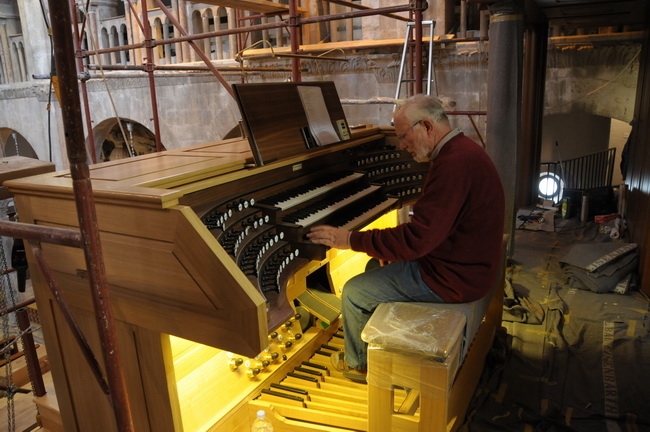
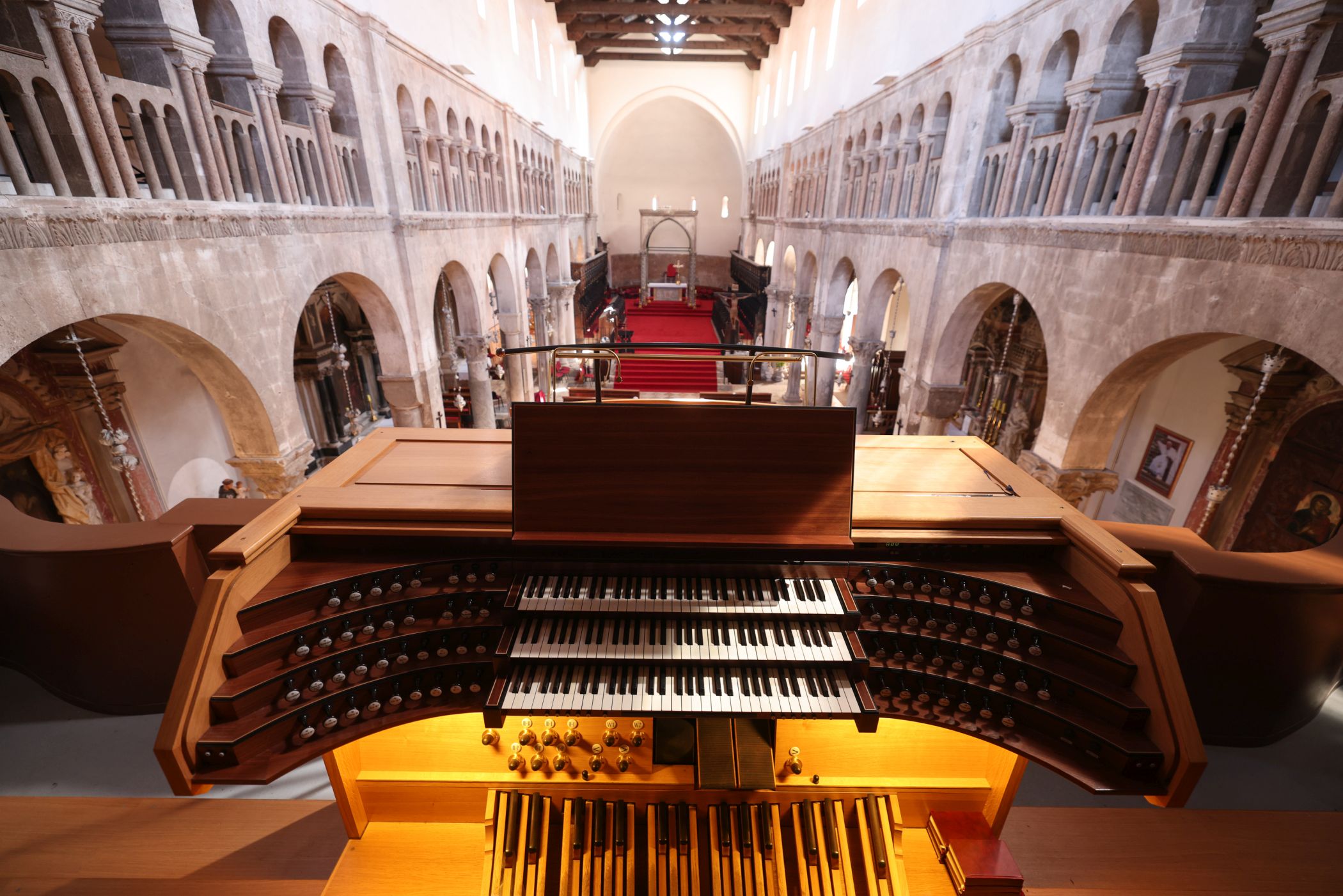
“This is a large Classical-French style instrument, with a very powerful yet non-aggressive sound and highly refined labial stops. Zadar can be proud of this instrument, one of the few in Croatia, with three manuals, a pedalboard, and 56 stops. These are the third-largest church organs in Croatia and the finest in terms of craftsmanship and mechanical action.”
Wolfgang Eisenbarth, the organ builder, notes:
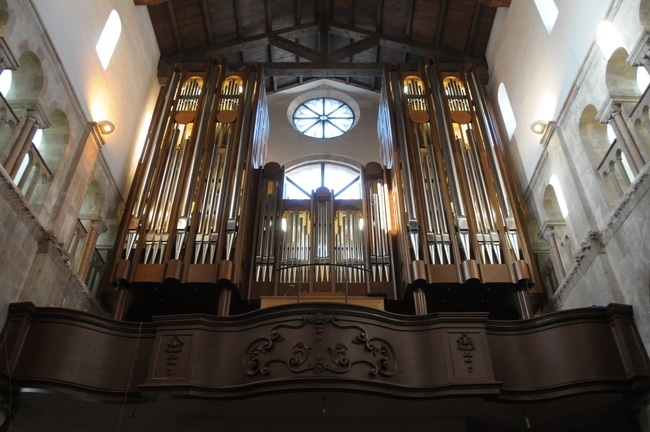
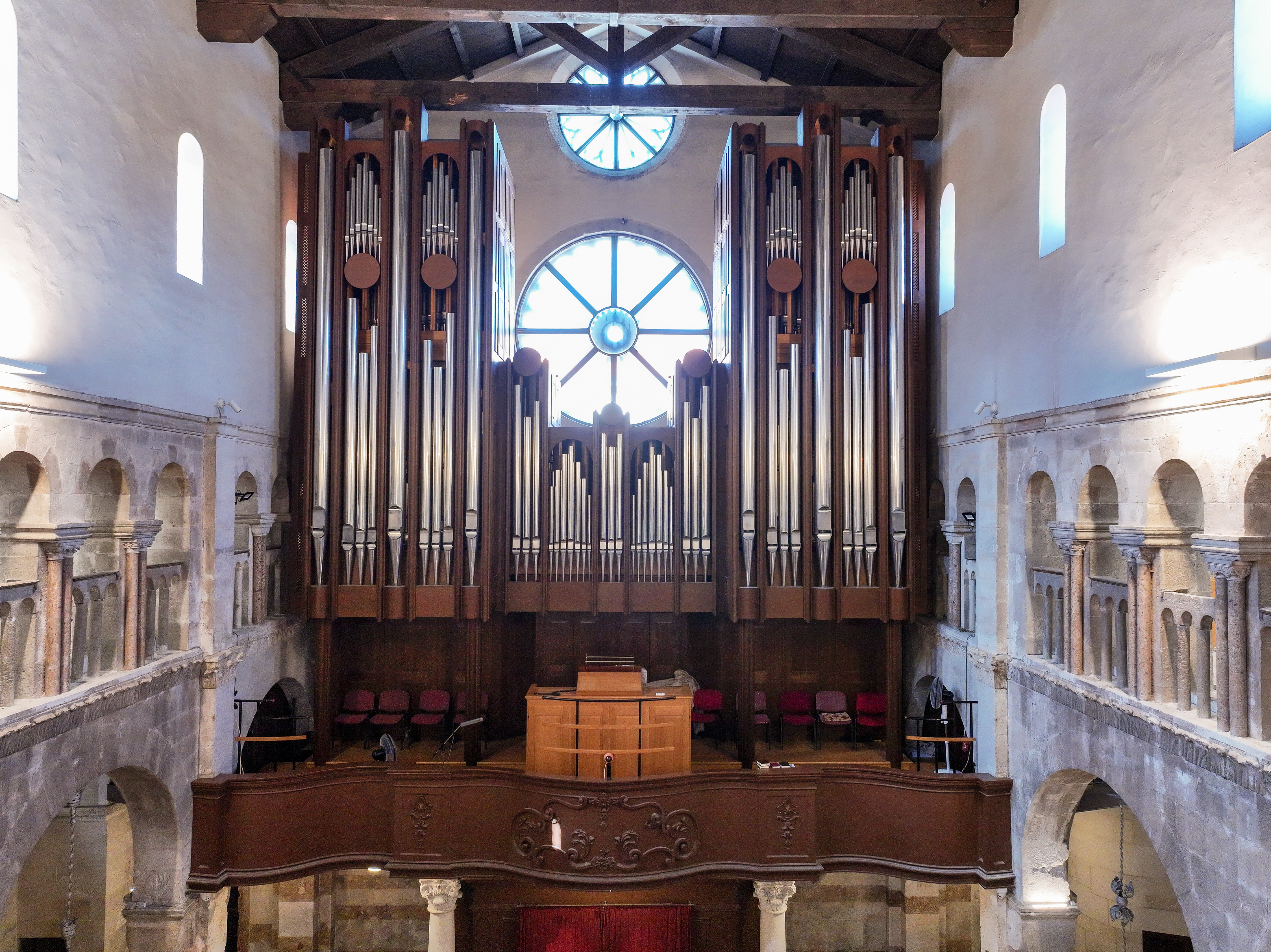
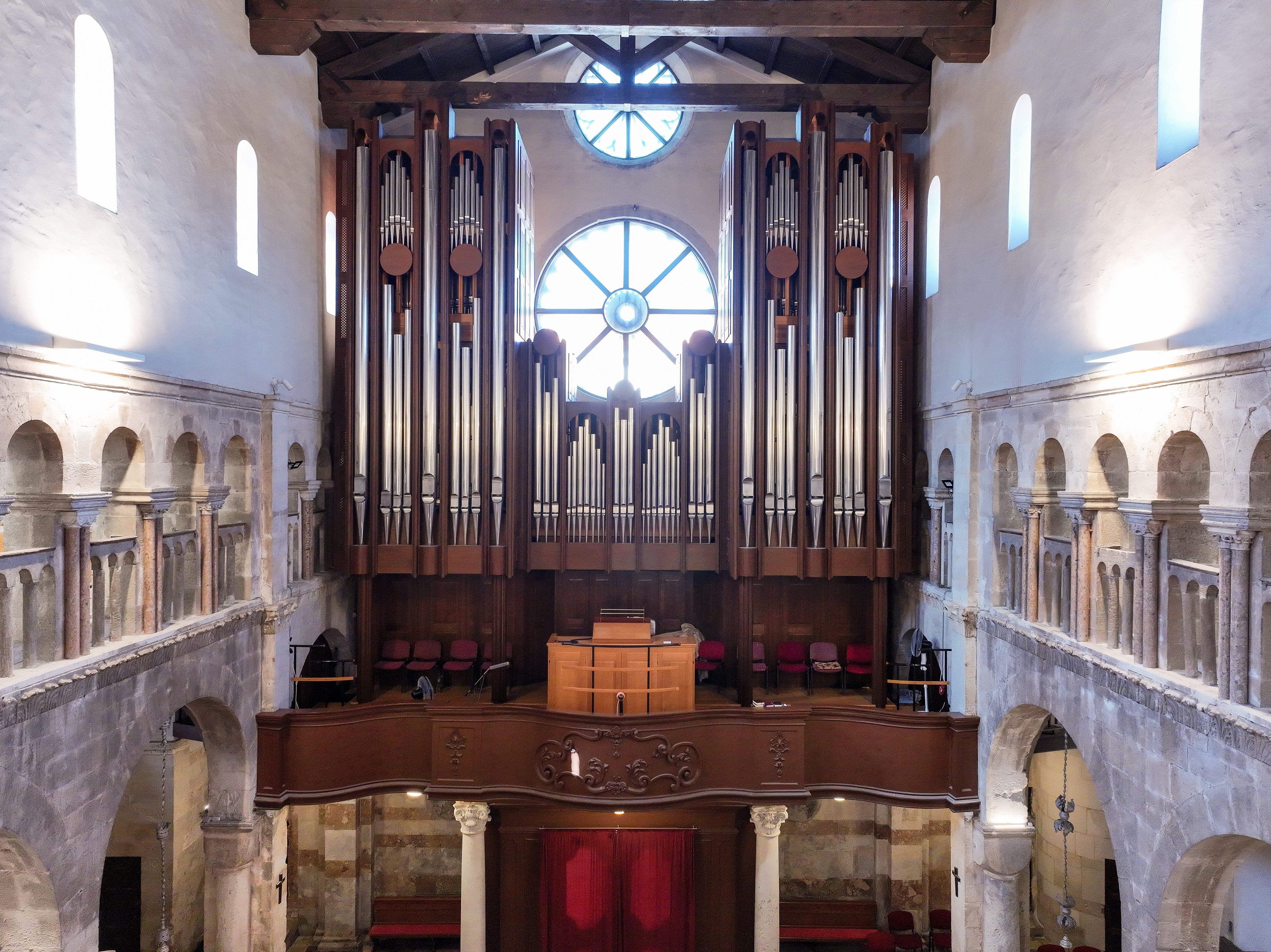
“The organ was designed to meet the highest musical and technical standards and to fit harmoniously within the church space. The case incorporates significant architectural elements, such as columns and arches, while leaving the rose window unobstructed. The instrument follows the 19th-century French musical style, with stops adapted specifically to this space.”
The German company Orgelbau Eisenbarth built the cathedral organ in 2010. The instrument has a French-style specification.
I. manual (Grand Orgue) C–c4
Principal 16'
Principal 8'
Flûte majeure 8'
Bourdon 8'
Prestant 4'
Flûte 4'
Quinte 2 2/3′
Doublette 2′
Cornet V2 2/3′
Gross Fourniture IV-V 2 2/3'
Gross Cymbale V 1 1/3′
Bombarde 16′
Trompette 8′
Clairon 4'
II. manual (Positif expressif) C–c4
Bourdon 16′
Principal 8′
Flûte à cheminée 8′
Salicional 8'
Quintatön 8′
Octave 4′
Flûte douce 4'
Nazard 2 2/3′
Flageolet 2′
Tierce 1 3/5′
Larigot 1 1/3′
Plein jeu III-IV 1 1/3
Clarinette 16′
Cromorne 8'
Voix humaine 8'
Tremblant
III. manual (Récit expressif) C–c4
Bourdon 16'
Diapason 8'
Flûte d'orchestre 8′
Cor de nuit 8′
Viol de Gambe 8′
Voix céleste 8′
Flûte harmonique 4'
Viole 4'
Nazard harmonique 2 2/3'
Octavin 2'
Tierce harmonique 1 3/5'
Piccolo 1′
Plein Jeu harmonique II-V 2'
Basson 16'
Trompette harmoniqu 8'
Hautbois 8'
Clairon harmonique 4'
Tremblant
Pédale C–g1
Gravissima 64'
Untersatz 32′
Principal (open wood) 32'
Quint 21 1/3'
Principalbass 16′
Contrabass 16′
Violonocelle 16' Subbass 16′
Quint 10 2/3'
Octave 8′
Flûte 8′
Octave 4′
Subcontratuba 64' Contrabombarde 32′
Bombarde 16′
Trompette 8′
Clairon 4'
Mechanical couplings:II-I, III-I, III-II, I-P, II-P, III-P, P-I, P-II, P-III; Electric: Sub III, Super III, Sub III-I, Super III-I, Sub III-II, Super III-II, Sub II, Super II, Sub II-I, Super II-I, Sub I, Super I. 4,000 free combinations and two crescendo rollers.
New stops currently under construction:
Quintadena 16'
Tibia 16'
Rankett 16'
Tuba Magna 16'
Grossegedacht 16'
Tibia 8'
Flûte douce 8´
Panflute 8'
Flute d'Eau 8'
Flute harmonique 8'
Fugara 8’
Unda maris 8'
Clarinette 8'
Geigenprincipal 8'
Gedeckt 8'
Aeoline 8'
Viole d'amour 8'
Aeolharfe 8'
Tuba Mirabilis 8'
Dulcian 8'
Cor Anglais 8 '
Bifara 8' (drv.)
Anastasiahorn 8'
Saxophone 8'
Chamade 16'
Chamade 8'
Chamade 4'
Dulciane 4' (labijalna)
Flûte à cheminée 4´
Trompeta quinta 5 1/3
Neuviéme 3 5/9'
Septiéme 2 2/7'
Sesquialtera 2 2/3' 1 3/5'
Tertian 1 3/5'+ 1 1/3'
Harmonia aetherea III-IV 2 2/3
Chimes (c0-g2)
(Harph)
Timbales
Orague
Zimbelstern
Nachtigal
Note: Stops marked in red are currently under construction. These are floating stops, playable on all manuals and the pedal without the use of couplers.